




menu

Medical & Dental Gas Plumbing in Los Angeles | Code-Compliant Systems That Keep Healthcare Facilities Operating Without Interruption

A Plus Plumbing Los Angeles designs, installs, and certifies medical gas piping systems that meet NFPA 99 and California Title 24 standards, keeping your practice operational and your patients safe.

Slider Image 1
Slider Image 2
Slider Image 3
Slider Image 4
Slider Image 5
Slider Image 7
Slider Image 8
Slider Image 9
Slider Image 10
Slider Image 11

Why Los Angeles Healthcare Facilities Cannot Afford Medical Gas System Failures

Medical and dental facilities in Los Angeles operate under strict regulatory oversight. The California Department of Public Health inspects medical gas pipeline services with zero tolerance for deficiencies. A failed oxygen delivery system, contaminated nitrous oxide line, or improperly brazed medical air connection does not just trigger citation. It shuts down operatories, cancels procedures, and erases revenue.

Los Angeles's building stock compounds the problem. Older medical offices in Koreatown, Mid-Wilshire, and West Adams feature outdated copper systems installed before modern ASSE 6010 standards existed. Expansion projects in Century City and Downtown high-rises require retrofitting medical gas piping systems into structures never designed for segregated zone valves and alarm panels.

Seismic activity adds another layer of complexity. Los Angeles sits on active fault lines. Medical gas installations must incorporate flexible connectors, seismic shut-off valves, and bracing that complies with California's stringent earthquake preparedness codes. A standard dental gas piping installation in Des Moines will not pass inspection here.

Your facility needs certified med gas plumbers who understand California's Title 22 requirements, can navigate Los Angeles Department of Building and Safety plan review, and deliver med gas installation services that pass third-party verification testing on the first attempt. Downtime costs thousands per hour. Compliance is not optional.

Why Los Angeles Healthcare Facilities Cannot Afford Medical Gas System Failures
How We Engineer Code-Compliant Medical Gas Systems for California Healthcare

How We Engineer Code-Compliant Medical Gas Systems for California Healthcare

A Plus Plumbing Los Angeles approaches every medical gas project with the understanding that your system is life-support infrastructure, not basic plumbing. We begin with load calculations based on your actual equipment requirements. A periodontal practice using conscious sedation has different nitrous oxide demands than an endodontic office running high-volume evacuation systems.

We design medical gas piping systems using ASSE 6010-certified brazing techniques. Every joint is purged with nitrogen during brazing to prevent internal oxidation. We do not use solder. We do not use compression fittings. Medical-grade Type K copper is brazed with silver alloy that creates molecular bonds capable of holding 3,000 PSI test pressures.

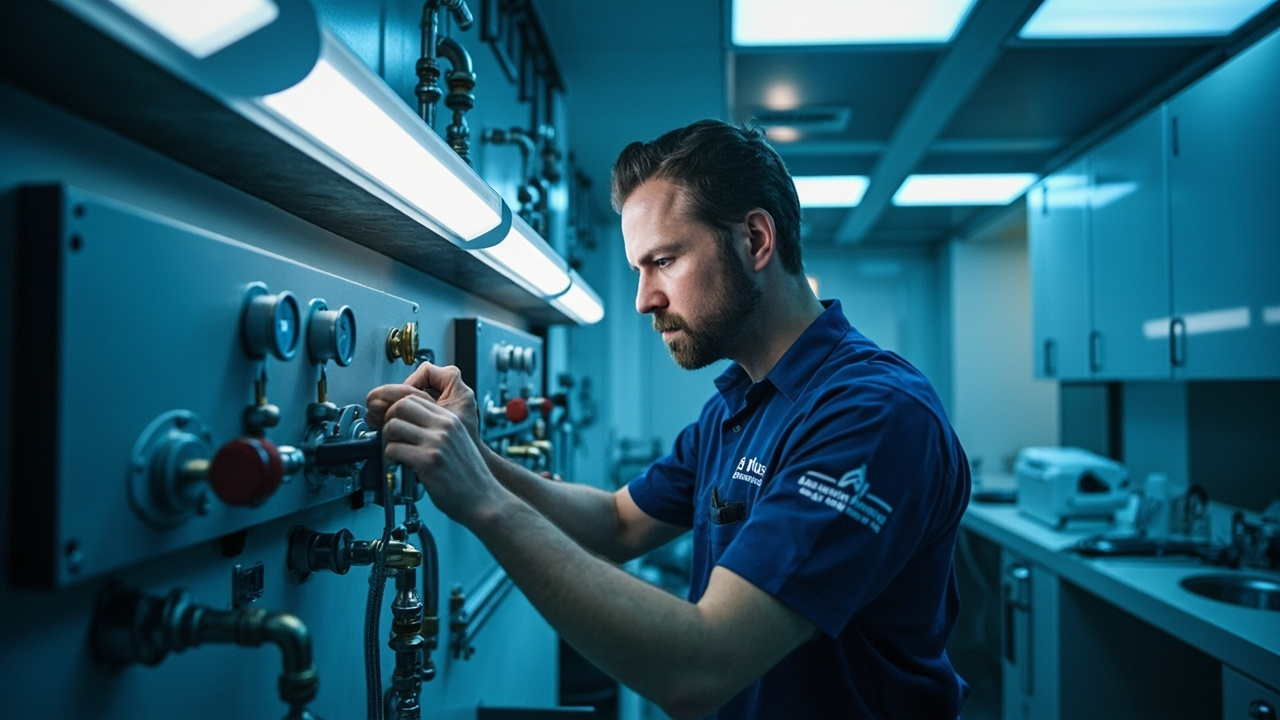
Our installations include dedicated zone valves for each operatory or patient room, strategically placed to allow isolation without shutting down the entire facility. We install master alarm panels that monitor pressure drops, crossover contamination, and reserve supply levels. These panels integrate with your facility management system.

Before we hand over a system, it undergoes standing pressure decay testing for 24 hours, followed by gas-specific purity testing. Oxygen lines are tested for hydrocarbon contamination. Nitrous oxide lines are verified for proper concentration. Medical air systems are tested for dew point and carbon monoxide content. We coordinate with third-party verifiers required by NFPA 99 and provide you with the certification documentation your accreditation body demands.

Our Medical Gas Installation Process

Medical & Dental Gas Plumbing in Los Angeles | Code-Compliant Systems That Keep Healthcare Facilities Operating Without Interruption
01

System Design and Permitting

We calculate your gas flow requirements based on simultaneous equipment usage, then design a system with adequate capacity and redundancy. Our team prepares engineered drawings for Los Angeles Department of Building and Safety submittal, coordinating with your architects and ensuring compliance with California Title 24 medical gas provisions. We secure all required permits before installation begins, preventing delays that cost you operational time.
02

Installation and Brazing

Certified med gas plumbers install Type K copper using only approved brazing methods. We maintain clean work environments to prevent particulate contamination, label every line according to NFPA color coding, and install seismic restraints at code-required intervals. All work occurs during non-operational hours when possible to minimize disruption. Zone valves, alarm panels, and outlet stations are positioned for maximum accessibility and compliance with ADA reach requirements.
03

Testing and Certification

Every medical gas pipeline undergoes pressure decay testing, cross-connection testing, and gas-specific purity analysis. We coordinate third-party verification required by California regulations, provide complete documentation packages for CDPH inspections, and train your staff on zone valve locations and emergency procedures. You receive a fully certified system ready for patient care the day we complete testing, with zero compliance risk.

Why Los Angeles Healthcare Providers Trust A Plus Plumbing for Medical Gas Systems

Medical gas work is not general plumbing. It requires specialized training, specific certifications, and detailed knowledge of codes most plumbers never encounter. A Plus Plumbing Los Angeles employs ASSE 6010-certified medical gas installers who complete continuing education on NFPA 99 updates and California regulatory changes.

We understand Los Angeles's inspection process. We know which plan reviewers at LADBS scrutinize seismic details and which inspectors focus on zone valve accessibility. We have relationships with approved third-party verifiers who can schedule quickly, preventing certification delays that postpone your occupancy.

Our experience spans the full range of Los Angeles healthcare environments. We have installed dental gas piping in single-chair practices in Glendale, retrofitted oxygen systems in mid-century medical buildings along Wilshire Boulevard, and designed multi-zone installations for surgery centers in Encino. We have navigated historic preservation requirements in buildings near MacArthur Park and coordinated with seismic retrofit contractors in soft-story structures throughout the city.

When you hire us, you get documentation that satisfies the most aggressive auditor. We provide complete as-built drawings, material certifications for every component, brazer qualification records, and test result logs. If your accreditation body requests supplemental verification five years later, we have the records immediately available.

You also get a team that understands business continuity. We schedule installations to avoid patient care disruptions, work overnight when necessary, and maintain your existing systems until new infrastructure is operational and certified.

What to Expect From Our Medical Gas Installation Service

Project Timeline and Scheduling

Design and permitting typically require three to six weeks depending on project complexity and LADBS workload. Installation duration varies with system size. A single operatory dental gas piping addition takes two to three days. A complete medical office buildout with oxygen, medical air, vacuum, and nitrous oxide systems requires two to four weeks. We provide detailed schedules before work begins and update you on permit status throughout the approval process. Most installations occur during non-operational hours to prevent revenue loss.

Initial Consultation and System Assessment

Our first meeting focuses on understanding your clinical workflows and equipment requirements. We document your current gas usage, planned equipment additions, and expansion timelines. For retrofit projects, we inspect existing systems for code compliance issues, identify necessary upgrades, and evaluate structural conditions affecting installation routes. You receive a detailed proposal outlining scope, timeline, permitting requirements, and testing protocols. We explain exactly what California regulations require and how our approach satisfies every compliance checkpoint.

System Performance and Reliability

When we complete installation, your medical gas piping systems deliver consistent pressure to every outlet regardless of simultaneous demand. Oxygen concentrations remain within NFPA purity standards. Vacuum systems maintain adequate flow for surgical evacuation. Alarm panels provide real-time monitoring of system status. Your staff can isolate individual zones for maintenance without affecting other areas. Every component meets or exceeds manufacturer specifications and code requirements. You operate with confidence that your infrastructure will not fail during critical procedures.

Ongoing Maintenance and Compliance Support

NFPA 99 requires annual testing of medical gas pipeline services. We provide maintenance agreements that include pressure testing, alarm system verification, and outlet flow checks. We track your compliance deadlines and schedule testing before accreditation surveys. If you expand your facility or add equipment, we assess whether your existing system has adequate capacity or requires upgrades. Our documentation support extends beyond installation. We maintain records that satisfy Joint Commission, AAAHC, and CDPH inspectors, providing you with audit-ready files whenever needed.

Frequently Asked Questions

You Have Questions,
We Have Answers

What is medical gas plumbing? +

Medical gas plumbing is a specialized system that delivers therapeutic gases and vacuum services to patient care areas in healthcare facilities. These systems transport oxygen, medical air, nitrous oxide, nitrogen, and carbon dioxide through dedicated piping networks. Los Angeles hospitals, surgery centers, and dental offices rely on these systems for patient safety and regulatory compliance. Installation requires strict adherence to NFPA 99 standards and Title 22 California Code of Regulations. The systems include source equipment, distribution piping, alarm panels, and terminal units at points of use. Proper design prevents cross-connections and ensures uninterrupted gas delivery during critical procedures.

What are the 5 classes of medical gas piping? +

The five classes of medical gas piping define installation requirements based on risk level. Class 1 systems serve patient care areas where gases support life, requiring the highest standards. Class 2 piping serves locations where gases are used but not critical to sustaining life. Class 3 covers research and teaching areas. Class 4 applies to animal care facilities. Class 5 addresses vacuum systems for waste anesthetic gas disposal. Los Angeles healthcare facilities must classify their systems correctly to meet California Department of Public Health inspection standards. Classification determines testing protocols, documentation requirements, and permissible materials. Misclassification creates serious liability exposure for facility operators.

What type of pipe is used for medical gas? +

Medical gas systems in Los Angeles use Type K or Type L copper tubing meeting ASTM B819 standards. The tubing must be cleaned for oxygen service and delivered with sealed ends to prevent contamination. Brazed joints use BCuP series filler metals without flux. Stainless steel piping is acceptable for specific applications. PVC, black iron, and galvanized steel are prohibited in medical gas service due to contamination risks. California Title 22 requires medical gas installers to maintain specialized certification. The tubing size depends on flow calculations and pressure drop analysis. Proper material selection prevents oxygen incompatibility and ensures system longevity in healthcare environments.

What is gas plumbing called? +

Gas plumbing is commonly called fuel gas piping or natural gas fitting when referring to combustible gases like natural gas or propane. For medical applications, it is specifically termed medical gas piping. In industrial settings, you will hear process gas piping or specialty gas systems. Los Angeles building codes distinguish between fuel gas work under the Plumbing Code and medical gas work under health facility regulations. Trade professionals who install these systems are licensed plumbers with additional certifications. Medical gas work requires ASSE 6010 or equivalent credentials. The terminology matters for permitting, inspection, and insurance purposes in commercial construction projects.

What is the highest paid type of plumber? +

Medical gas plumbers typically command the highest rates in the plumbing trade. The specialized training, certification requirements, and liability exposure justify premium compensation. In Los Angeles, medical gas technicians earn substantially more than residential service plumbers due to ASSE 6010 certification costs and ongoing education mandates. Master plumbers serving high-rise commercial projects in Downtown Los Angeles also command top rates. Pipefitters working on complex industrial systems or union scale prevailing wage projects earn competitive compensation. The medical gas specialty combines technical complexity with stringent regulatory oversight, making it the most demanding and compensated plumbing niche in healthcare construction.

What is an example of a medical gas? +

Oxygen is the most common medical gas, used for respiratory support and anesthesia delivery. Medical air provides breathing gas free from oil and contaminants. Nitrous oxide serves as an analgesic in dental offices throughout Los Angeles and surgical centers. Carbon dioxide is used in laparoscopic procedures and respiratory therapy. Nitrogen powers surgical tools and pressure calibration equipment. Los Angeles healthcare facilities also use vacuum systems to remove waste anesthetic gases and surgical fluids. Each gas requires separate color-coded piping, dedicated storage, and specific pressure regulation. Terminal units at patient bedsides connect to delivery devices through quick-connect fittings designed to prevent accidental cross-connections.

What is a Category 2 medical gas? +

Category 2 medical gas refers to nonflammable medical gases under compressed gas regulations. This includes oxygen, medical air, nitrogen, nitrous oxide, and carbon dioxide. Category 2 designation affects storage requirements, cylinder handling procedures, and emergency response protocols in Los Angeles healthcare facilities. The classification differs from Category 1 flammable gases. Storage areas must meet NFPA 99 separation distances and ventilation requirements. Los Angeles Fire Department inspections verify proper Category 2 gas storage and manifold installations. The designation impacts facility planning, equipment selection, and operational procedures. Understanding category classifications ensures regulatory compliance and maintains safe clinical environments.

What are the 4 types of pipes? +

The four primary pipe types in commercial plumbing are copper, PVC, CPVC, and PEX. Copper dominates medical gas and potable water applications due to reliability and code acceptance. PVC serves drain, waste, and vent systems in Los Angeles commercial buildings. CPVC handles hot water distribution where permitted. PEX offers flexibility for certain water applications. Medical gas systems exclusively use copper or stainless steel. Black steel serves natural gas distribution. Cast iron appears in older drainage systems. Los Angeles construction projects select pipe materials based on application, building codes, and engineering specifications. Material compatibility with transported fluids determines appropriate pipe selection.

Which type of pipe cannot be used for a gas? +

PVC and CPVC pipes cannot be used for gas service. These plastic materials degrade when exposed to natural gas, propane, or medical gases. Galvanized steel is prohibited in medical gas systems due to zinc flaking contamination. Aluminum cannot serve oxygen systems because of fire risk. Los Angeles building codes specifically restrict materials for gas piping to approved metals. Black iron corrodes in medical gas applications. Cast iron lacks the jointing methods required for gas-tight connections. Only copper, stainless steel, and specific approved materials meet safety standards for gas distribution. Material restrictions protect building occupants and ensure system reliability under California regulations.

Can schedule 40 PVC be used for gas? +

Schedule 40 PVC cannot be used for any gas piping application. Natural gas and propane chemically attack PVC, causing material failure and dangerous leaks. Medical gases require metal piping per NFPA 99 standards. Los Angeles building inspectors will reject PVC installations in gas service. The material lacks fire resistance and mechanical strength for pressurized gas systems. Only metal piping with brazed or threaded connections meets code requirements. Underground fuel gas lines use approved polyethylene specifically manufactured for gas service, not standard PVC. Attempting to use PVC for gas creates serious safety hazards, code violations, and liability exposure for facility operators.

Why Los Angeles Seismic Requirements Demand Specialized Medical Gas Installation Expertise

Los Angeles sits in one of the most seismically active regions in North America. The 1994 Northridge earthquake demonstrated how ground motion affects rigid piping systems. California now requires medical gas installations to include flexible connectors at equipment interfaces, seismic shut-off valves that prevent gas release during earthquakes, and bracing systems engineered to California Building Code Chapter 16 standards. Generic medical gas piping systems designed for Kansas or Florida will not pass inspection here. Every support, hanger, and penetration must account for lateral movement. Los Angeles healthcare facilities need certified med gas plumbers who understand these requirements and implement them correctly the first time.

Med gas installation services in Los Angeles also navigate the city's complex permit process. LADBS requires engineered drawings stamped by California-licensed professionals, detailed product submittals for every component, and coordination with fire department plan reviewers when systems serve surgical spaces. Projects in historic districts face additional scrutiny. Facilities in high-rise buildings must comply with pressure zone requirements. A Plus Plumbing Los Angeles maintains relationships with local inspectors, understands documentation expectations, and delivers installations that pass inspection without costly delays or re-work that disrupts your operations.
Plumbing Services in The Los Angeles Area

Discover where we operate and easily locate our office or service areas on the map below. Whether you're planning routine maintenance or dealing with an urgent plumbing issue, you’ll see we’re right in your neighborhood. Use the interactive map to view service zones, our central office location, and nearby landmarks. You can zoom in for detailed directions or get contact info directly—with just a click, get directions to meet our skilled plumbing team in person.

Address:
A Plus Plumbing Los Angeles, 6080 Center Dr, Los Angeles, CA, 90045

Additional Services We Offer

Our news updates

Latest Articles & News from The Blogs

Everything You Need to Know About Sewer Connections for a Valley Village ADU Adding an accessory dwelling unit to your…

Everything You Need to Know About Sewer Connections for a Valley Village ADU

Everything You Need to Know About Sewer Connections for a Valley Village ADU Adding an accessory dwelling unit to your…

How to Get Rid of That Sulfur Smell in Your Van Nuys Water Heater

How to Get Rid of That Sulfur Smell in Your Van Nuys Water Heater \p>If your hot water smells like…

Why Replacing Plastic Supply Lines With Braided Stainless Steel Can Save Your Toluca Lake Home From Water Damage

Why Replacing Plastic Supply Lines With Braided Stainless Steel Can Save Your Toluca Lake Home From Water Damage Water damage…

Contact Us

Your facility cannot afford compliance failures or installation delays. Call A Plus Plumbing Los Angeles at (213) 449-7577 for medical gas piping systems that pass inspection and keep your practice operating safely.