




menu

Basement Flooding Pump-Out in Los Angeles – Crews Dispatched in Under 60 Minutes

When your basement floods, every minute counts. Our basement flooding pump-out teams deploy immediately across Los Angeles with industrial submersible pumps, truck-mounted extractors, and flood containment systems to stop structural damage before it spreads.

Slider Image 1
Slider Image 2
Slider Image 3
Slider Image 4
Slider Image 5
Slider Image 7
Slider Image 8
Slider Image 9
Slider Image 10
Slider Image 11

Why Basement Flooding Escalates Fast in Los Angeles Properties

Your basement is filling with water. Right now, the clock is working against you.

Most Los Angeles homeowners do not realize that even shallow basement flooding can compromise your foundation within hours. The combination of our region's aging municipal water infrastructure and the concrete slab foundations common in mid-century Los Angeles homes creates a unique vulnerability. When pipe bursts or heavy rainfall overwhelms exterior drainage systems, water pools against foundation walls with nowhere to go but inside.

A flooded basement is not just a water problem. It is a structural emergency. Standing water exerts hydrostatic pressure against foundation walls, seeping into microscopic cracks and expansion joints. As water saturates concrete and drywall, it creates ideal conditions for mold colonization within 24 to 48 hours. Electrical systems submerged in water present electrocution risks. HVAC equipment, water heaters, and stored belongings absorb damage by the minute.

The emergency basement water removal process must begin immediately. Standard wet-dry vacuums cannot handle volume flooding. You need industrial-grade submersible pumps capable of moving hundreds of gallons per minute, truck-mounted extraction units for deep water removal, and commercial dehumidifiers to address moisture that penetrates porous materials.

Los Angeles properties built before 1980 often lack proper sump pump systems or have outdated perimeter drainage. When these systems fail during storms or plumbing failures, the flooded basement extraction service becomes critical to preventing tens of thousands in structural repairs. The difference between surface water damage and foundation failure is measured in hours, not days.

Why Basement Flooding Escalates Fast in Los Angeles Properties
How Industrial Pump-Out Systems Stop Basement Flooding

How Industrial Pump-Out Systems Stop Basement Flooding

Emergency flood pumping requires specialized equipment and systematic water removal protocols that protect your property while extracting standing water.

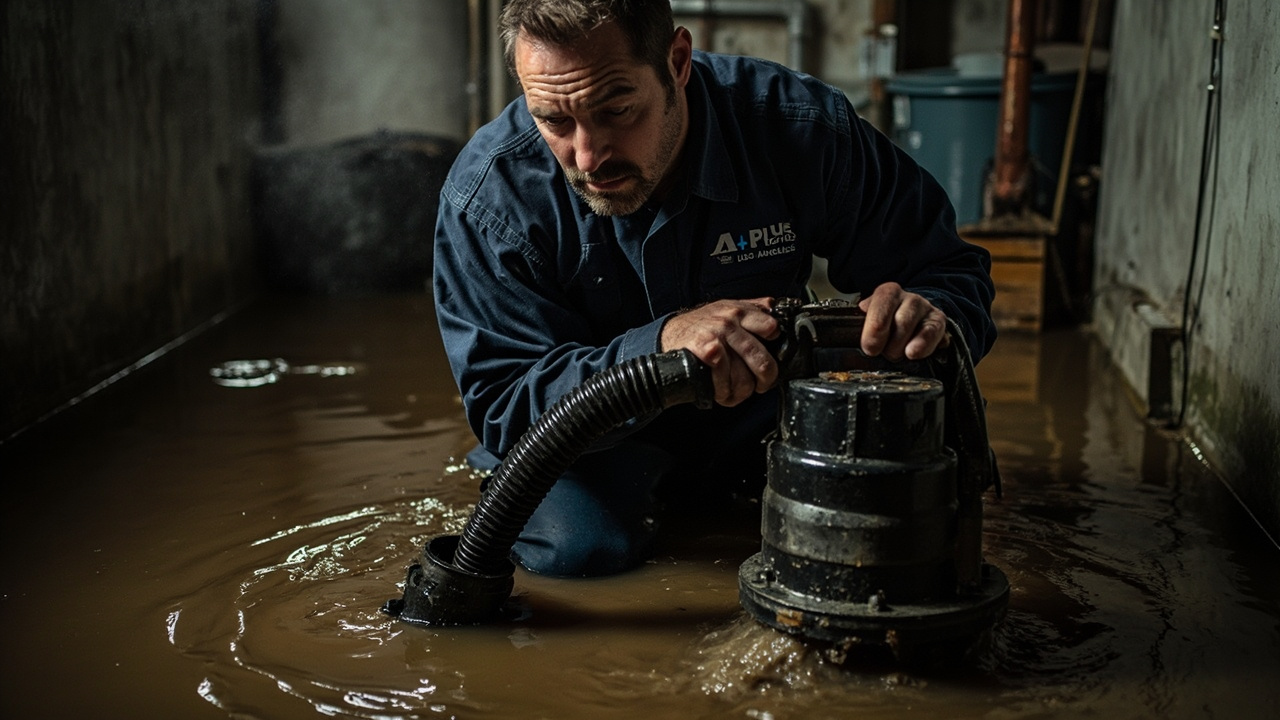
We deploy truck-mounted vacuum systems capable of handling debris-contaminated water without clogging. Our submersible trash pumps move up to 400 gallons per minute through 3-inch discharge hoses, clearing basement floors in a fraction of the time portable units require. For properties with multiple flooding sources, we position multiple extraction points to create negative pressure zones that pull water away from foundation walls and toward discharge points.

The basement water pump out service follows a specific sequence. First, we kill power to the affected area and verify no electrical hazards exist. Next, we assess water depth and contamination level. Clean water from supply line breaks receives different treatment than sewage backups. We position high-capacity pumps at the lowest elevation points, using gravity to consolidate water flow.

As water levels drop, we switch to surface extraction equipment. Truck-mounted wands pull moisture from carpeting, while weighted extractors address standing water trapped in floor-level crevices. We remove saturated materials like drywall, insulation, and carpeting that cannot be salvaged, exposing wall cavities and subfloors to air circulation.

The flooded basement water removal services extend beyond pumping. We inject antimicrobial treatments into porous surfaces, position commercial air movers to create cross-ventilation, and deploy low-grain refrigerant dehumidifiers that pull moisture from the air faster than standard units. Moisture meters verify we have reached structural drying targets before we clear the site.

This systematic approach prevents the secondary damage that causes most long-term problems after basement flooding.

What Happens During Emergency Basement Water Extraction

Basement Flooding Pump-Out in Los Angeles – Crews Dispatched in Under 60 Minutes
01

Immediate Dispatch and Assessment

Our emergency response team arrives with industrial pump-out equipment and moisture detection tools. We perform a rapid safety assessment, identify water sources, measure contamination levels, and calculate total volume to determine equipment staging. You receive a verbal briefing on the extraction timeline and potential structural concerns before we begin pumping operations.
02

High-Volume Water Removal

We position submersible pumps at floor drains and low points, running discharge lines away from your foundation. Truck-mounted vacuum systems extract water from carpets and tight spaces. As water levels drop, we switch to surface extraction wands and weighted tools that pull moisture from flooring materials. Continuous monitoring ensures complete removal without damaging exposed surfaces during the emergency basement water removal process.
03

Structural Drying and Documentation

After all standing water is removed, we deploy commercial dehumidifiers and air movers positioned to maximize evaporation rates. Moisture meters track drying progress in walls, floors, and structural components. We document pre-extraction and post-extraction conditions with photos and moisture readings for insurance claims. You receive a detailed report showing moisture levels returned to normal ranges before equipment is removed.

Why Los Angeles Property Owners Trust A Plus Plumbing Los Angeles for Basement Flooding Emergencies

When your basement floods, you need a response team that understands Los Angeles building construction and can mobilize industrial equipment immediately.

A Plus Plumbing Los Angeles maintains a dedicated fleet of truck-mounted extraction systems, submersible pumps, and commercial drying equipment stationed across the Los Angeles metro area. We do not subcontract emergency calls or make you wait for equipment rentals. Our technicians carry the tools needed for complete flooded basement extraction service on every truck.

Los Angeles properties present unique challenges. Homes in older neighborhoods like Silver Lake and Echo Park often have partial basements or below-grade utility rooms with limited access points. Mid-century construction in the San Fernando Valley frequently features slab-on-grade foundations with shallow crawl spaces that trap water. Hillside properties in areas like Los Feliz face drainage issues during heavy rains when runoff overwhelms perimeter systems.

We have worked in every Los Angeles neighborhood and understand how local construction methods affect water intrusion patterns. Our teams know which properties likely have clay tile sewer lines prone to root intrusion, which areas experience high water table issues, and how Los Angeles Department of Building and Safety codes affect restoration requirements.

Insurance companies recognize documentation quality matters for claim approval. We provide detailed moisture mapping, photo documentation of affected areas, and equipment logs that satisfy adjuster requirements. Our reports specify which materials require removal versus restoration, helping you avoid disputes over coverage.

The emergency flood pumping response begins the moment you call. We answer 24 hours a day, seven days a week, including holidays. No answering services. No callbacks. You speak directly with our dispatch team who can have crews en route in minutes, not hours.

What to Expect During Basement Flood Pump-Out Service

Response Time and Availability

Our emergency basement water removal teams deploy within 60 minutes of your call anywhere in Los Angeles County. We maintain 24-hour dispatch with technicians on standby rotation, so you never wait for crews to be assembled or equipment to be sourced. Night, weekend, and holiday response carries no premium charges. Our trucks arrive fully equipped with pumps, extraction tools, and drying equipment sized for residential basement flooding scenarios. For commercial properties or large-scale flooding, we can stage additional equipment and personnel to match project scope.

On-Site Assessment and Safety Protocols

Before pumping begins, our technicians perform a complete safety evaluation. We verify electrical panels are de-energized, check for gas line damage, and assess structural stability if flooding is severe. Using thermal imaging and moisture meters, we identify hidden water migration behind walls and under flooring. You receive a verbal walkthrough explaining water source, contamination level, estimated extraction time, and materials likely requiring removal. We answer questions about insurance documentation and provide photos you can forward to your adjuster immediately.

Complete Water Extraction Results

The basement water pump out service removes all visible standing water and addresses moisture trapped in building materials. Our industrial pumps clear deep water rapidly, while surface extraction tools pull residual moisture from carpets, tile grout, and concrete pores. We do not leave until moisture meter readings confirm structural components have reached acceptable drying thresholds. Antimicrobial treatments are applied to all affected surfaces to prevent microbial growth. You receive documentation showing before and after moisture levels, photos of completed work, and equipment placement logs for insurance purposes.

Follow-Up Monitoring and Prevention

After initial extraction, we schedule follow-up visits to verify continued drying progress and check for hidden moisture pockets that can appear as materials off-gas. Our technicians inspect sump pumps, check foundation drainage systems, and identify vulnerabilities that contributed to flooding. We provide specific recommendations for backwater valve installation, sump pump upgrades, or perimeter drain improvements that prevent future incidents. If reconstruction is needed, we coordinate with contractors to ensure proper moisture barriers and waterproofing measures are installed during repairs.

Frequently Asked Questions

You Have Questions,
We Have Answers

How to pump water out of a flooded basement? +

Stop the water source first if you can locate it, then shut off power to the basement at the breaker panel. Use a submersible pump or wet/dry vacuum to remove standing water, starting at the lowest point. Place the pump intake on bricks to avoid debris clogging. Discharge water away from your foundation, at least 20 feet. If water depth exceeds 12 inches or you cannot identify the source, call a professional immediately. Los Angeles clay soil can shift after flooding, so do not delay. Document everything with photos for insurance before pumping begins.

How much does it cost to pump out a flooded basement? +

Costs range based on water volume, contamination level, and damage extent. Most Los Angeles pump-out services charge based on hours needed and equipment type. Clean water removal is less expensive than sewage or storm drain backups, which require hazmat protocols. Structural drying, mold remediation, and repairs add to the total. Emergency 24/7 service typically costs more but prevents exponential damage. Get multiple quotes but prioritize speed over savings. Standing water damages flooring, drywall, and framing quickly. Your insurance may cover costs if the flood resulted from a covered peril like pipe bursts.

Should you pump out the basement rapidly if it is flooded to avoid standing water? +

No. Pump slowly to prevent structural collapse. If exterior soil is saturated, rapid pumping creates unequal pressure on foundation walls, which can bow or crack. Remove water in stages, lowering the level by one-third each day, especially if flooding exceeds 24 inches. Los Angeles foundations, often built on expansive clay soils, are vulnerable to sudden pressure changes. Monitor walls for bulging or cracking during pump-out. If you see movement, stop immediately and consult a structural engineer. Fast removal feels urgent but can cause catastrophic foundation failure that costs tens of thousands to repair.

How to remove 2 inches of water from a basement? +

For shallow flooding under three inches, use a wet/dry vacuum or mop and bucket method. Work from the perimeter toward a floor drain if available. A small utility pump speeds removal but may not prime effectively in shallow water. Place towels along baseboards to absorb residual moisture. After removing visible water, run fans and dehumidifiers immediately to prevent mold growth, which starts within 24 to 48 hours in Los Angeles humidity. Pull back carpets and padding. Check behind stored items. Shallow water still penetrates drywall, insulation, and subflooring, so thorough drying is critical.

What to do immediately after a basement flood? +

Shut off electricity at the main panel before entering. Document damage with photos and video for insurance. Remove standing water quickly using pumps or professional services. Move undamaged belongings to dry areas. Pull wet carpets, padding, and damaged drywall within 48 hours to prevent mold colonization. Open windows if outdoor humidity is lower. Run industrial fans and dehumidifiers continuously. In Los Angeles, our mild climate helps drying, but enclosed basements stay damp. Contact your insurance company immediately. Avoid DIY electrical work. Do not use basement until a licensed electrician inspects wiring, outlets, and panels for water exposure.

What kind of pump do I need for a flooded basement? +

Use a submersible sump pump for deep water, rated for solids if debris is present. Clean water requires a standard 1/3 to 1/2 horsepower pump with adequate head height to discharge outside. Sewage or contaminated water demands a sewage ejector pump or trash pump that handles solids up to two inches. Check the vertical lift distance from your basement to discharge point. Los Angeles homes may need pumps with higher head pressure due to elevation changes. Rent commercial-grade equipment for large volumes. Avoid using a shop vacuum for deep flooding. It cannot handle volume and risks electrical shock.

Will insurance pay for a flooded basement? +

It depends on the cause. Homeowners insurance typically covers sudden, accidental events like burst pipes or water heater failures. Flood insurance, separate from standard policies, covers groundwater intrusion, storm surge, or overwhelmed storm drains. Los Angeles is not a high flood zone, but coverage is available through NFIP. Sewer backups require specific endorsements. Negligence like ignored maintenance or slow leaks is excluded. File your claim immediately with detailed documentation. Your adjuster will determine coverage. Review your policy declarations page now. Most Los Angeles homeowners lack flood insurance and face out-of-pocket costs for storm-related basement flooding.

How long does it take to pump water out of a basement? +

Time depends on water volume, pump capacity, and source flow. A standard sump pump removes roughly 1,800 gallons per hour. A basement with six inches of water covering 1,000 square feet holds about 3,750 gallons, taking two to three hours to pump out. Continuous inflow from broken pipes or storm drains extends the timeline until you stop the source. Deep flooding requires staged removal over multiple days to prevent foundation damage. Los Angeles professionals use high-capacity pumps and multiple units to accelerate safe removal. Do not rush. Monitor foundation walls throughout the process for structural movement.

Will a flooded basement dry on its own? +

No. Standing water evaporates slowly and causes severe secondary damage while sitting. Mold colonizes porous materials within 24 to 48 hours. Wood framing absorbs moisture and rots. Drywall wicks water upward, spreading damage beyond the flood line. Concrete stays damp for weeks without active drying, promoting efflorescence and spalling. Los Angeles basements, often poorly ventilated, trap humidity. Passive drying through open windows is inadequate. You need mechanical dehumidifiers, air movers, and sometimes heat to achieve safe moisture levels below 15 percent. Waiting guarantees mold growth, structural weakening, and dramatically higher restoration costs.

What is the #1 cause of basement flooding? +

Heavy rainfall overwhelming drainage systems is the top cause in Los Angeles. Our clay soil has poor permeability, causing surface water to pool against foundations. Clogged gutters and downspouts direct roof runoff directly to basement walls. Foundation cracks allow seepage during winter storms. Sewer line backups occur when aging municipal systems cannot handle storm surges. Broken water supply lines and failed water heaters flood basements instantly. Sump pump failures during power outages leave basements unprotected. Regular maintenance of gutters, grading, and sump systems prevents most floods. Install a battery backup sump pump if your area experiences frequent outages.

How Los Angeles Storm Drains and Infrastructure Impact Basement Flooding Risk

Los Angeles maintains over 3,000 miles of storm drains designed to channel rainfall to the Los Angeles River and Pacific Ocean, but many neighborhoods rely on systems installed in the 1940s and 1950s. During heavy rainfall events, these aging storm drains reach capacity quickly, causing street flooding that seeps into below-grade spaces through foundation cracks and window wells. Properties in low-lying areas near Ballona Creek, the Los Angeles River, and Compton Creek face elevated risk when storm systems overwhelm drainage infrastructure. The flooded basement extraction service becomes critical in these scenarios because municipal systems cannot be upgraded fast enough to prevent water intrusion during severe weather.

A Plus Plumbing Los Angeles has provided emergency basement water removal across Los Angeles County for years, responding to flooding events in every neighborhood from Westchester to Boyle Heights. We understand which areas experience chronic drainage problems, where outdated clay sewer lines contribute to backup flooding, and how hillside properties require different pump-out approaches than flat terrain homes. Our familiarity with Los Angeles Department of Building and Safety standards ensures all emergency flood pumping work meets code requirements for water damage restoration. When you need immediate help, local expertise makes the difference between controlled extraction and escalating damage.
Plumbing Services in The Los Angeles Area

Discover where we operate and easily locate our office or service areas on the map below. Whether you're planning routine maintenance or dealing with an urgent plumbing issue, you’ll see we’re right in your neighborhood. Use the interactive map to view service zones, our central office location, and nearby landmarks. You can zoom in for detailed directions or get contact info directly—with just a click, get directions to meet our skilled plumbing team in person.

Address:
A Plus Plumbing Los Angeles, 6080 Center Dr, Los Angeles, CA, 90045

Additional Services We Offer

Our news updates

Latest Articles & News from The Blogs

Everything You Need to Know About Sewer Connections for a Valley Village ADU Adding an accessory dwelling unit to your…

Everything You Need to Know About Sewer Connections for a Valley Village ADU

Everything You Need to Know About Sewer Connections for a Valley Village ADU Adding an accessory dwelling unit to your…

How to Get Rid of That Sulfur Smell in Your Van Nuys Water Heater

How to Get Rid of That Sulfur Smell in Your Van Nuys Water Heater \p>If your hot water smells like…

Why Replacing Plastic Supply Lines With Braided Stainless Steel Can Save Your Toluca Lake Home From Water Damage

Why Replacing Plastic Supply Lines With Braided Stainless Steel Can Save Your Toluca Lake Home From Water Damage Water damage…

Contact Us

Your basement is flooding. Do not wait for damage to worsen. Call (213) 449-7577 right now for immediate dispatch. Our emergency basement water removal teams are standing by with industrial pump-out equipment ready to deploy across Los Angeles.