




menu

Commercial Repiping Services in Los Angeles – Minimize Downtime with Industrial-Grade Pipe Replacement

A Plus Plumbing Los Angeles delivers commercial repiping services engineered for business continuity, using high-capacity industrial pipe systems that keep your operations running while we upgrade your building's infrastructure.

Slider Image 1
Slider Image 2
Slider Image 3
Slider Image 4
Slider Image 5
Slider Image 7
Slider Image 8
Slider Image 9
Slider Image 10
Slider Image 11

Why Los Angeles Commercial Buildings Face Accelerated Pipe Deterioration

The combination of Los Angeles's hard water composition and seismic building codes creates unique challenges for commercial plumbing systems. Buildings in Downtown Los Angeles and the Fashion District experience corrosion rates 40 percent faster than national averages due to mineral deposits in the metropolitan water supply. Add in decades of lateral movement from micro-seismic activity, and you get stress fractures in galvanized steel and copper systems that compromise water pressure and quality.

Commercial building repiping becomes critical when you see reduced flow across multiple floors, discolored water in tenant spaces, or pinhole leaks appearing in clusters. These failures do not just inconvenience tenants. They create liability exposure, trigger insurance claims, and force partial building closures that cost you revenue every day you delay the fix.

Los Angeles commercial properties built before 1985 typically use galvanized steel supply lines that have reached end-of-service life. The oxidation inside these pipes restricts flow and contaminates water with iron particles. Industrial repiping services address the entire vertical stack and horizontal distribution system, not just the visible problem areas. Multi-story buildings in Koreatown, Mid-Wilshire, and Century City require commercial plumbing repipe projects that account for fire suppression integration, health department compliance for food service tenants, and phased installation that keeps businesses operational during construction.

Business pipe replacement is not a maintenance expense. It is risk mitigation. Failed pipes flood commercial spaces, damage inventory, and create mold conditions that require full tenant relocations.

Why Los Angeles Commercial Buildings Face Accelerated Pipe Deterioration
How Industrial Repiping Maintains Business Operations During Installation

How Industrial Repiping Maintains Business Operations During Installation

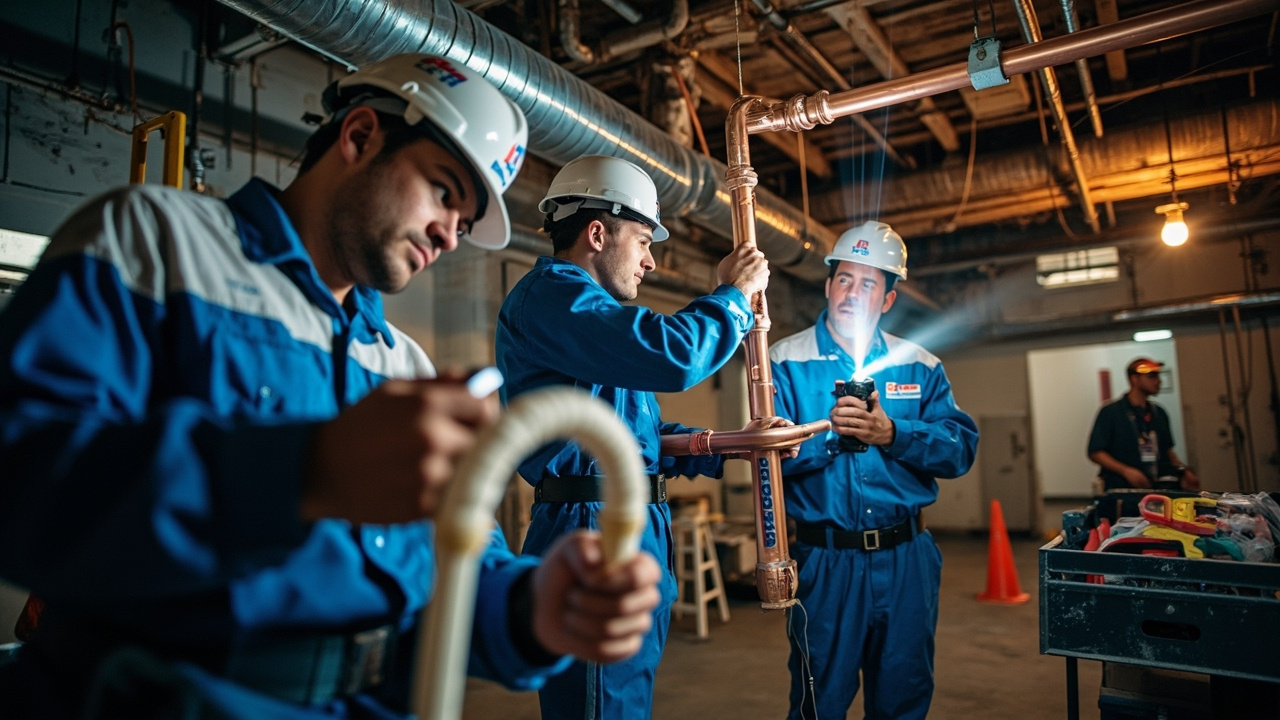
Commercial pipe replacement requires surgical precision and project management that residential work does not. We isolate sections of your building hydraulically, maintaining water service to operational areas while we replace deteriorated pipe runs. This phased approach keeps your tenants in place and your revenue stream intact.

The process starts with hydraulic modeling of your existing system. We map every riser, branch line, and fixture connection to identify critical paths and redundancy opportunities. For buildings over three stories, we install temporary bypass lines that maintain domestic water and fire suppression service during main line replacement. This is standard procedure for commercial building repiping in Class A office buildings and mixed-use developments where continuous occupancy is non-negotiable.

Material selection matters. We specify Type L copper for high-pressure applications, PEX for flexibility in retrofit situations, and CPVC where chemical resistance is required. Los Angeles Fire Department regulations require specific materials for fire sprinkler integration, and we coordinate with fire protection contractors to maintain your building's fire rating throughout the repipe process.

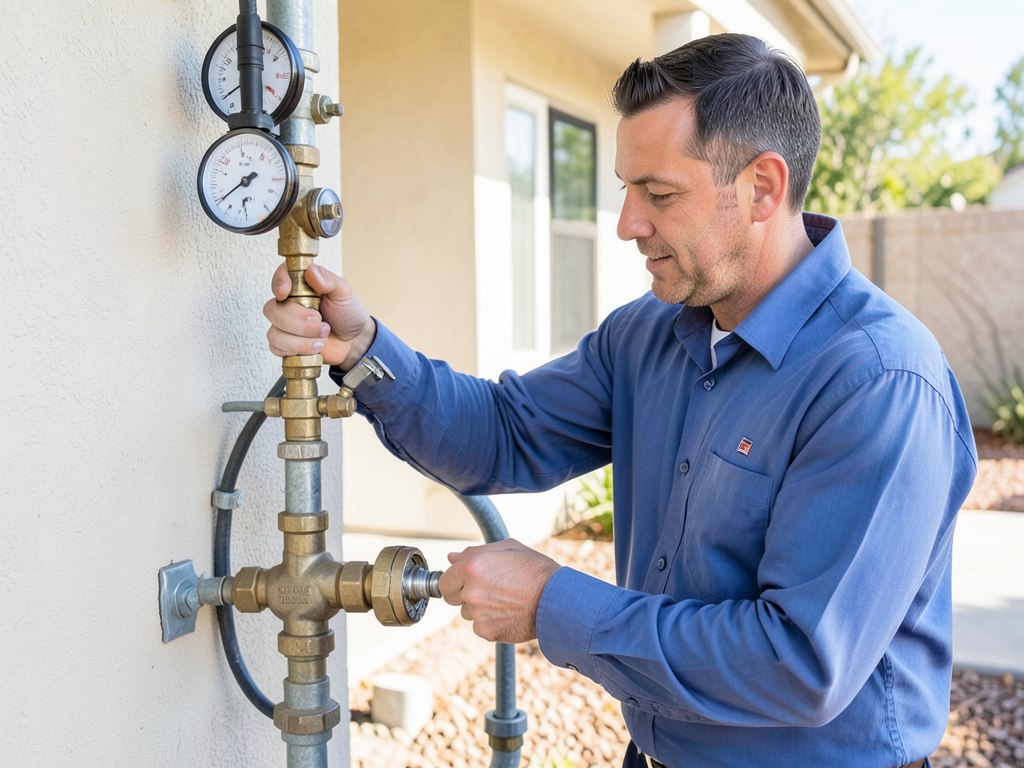
Industrial repiping services include pressure testing at 150 PSI for 24 hours before we close walls and restore finishes. Every joint gets documented with digital photography for your facility records. We pull permits through the Los Angeles Department of Building and Safety and schedule inspections that keep your project compliant without delays.

The difference between amateur work and professional commercial plumbing repipe execution shows up in the details. Proper pipe support spacing, expansion loop installation, and isolation valve placement determine whether your new system lasts 50 years or fails in 15.

The Commercial Repiping Workflow

Commercial Repiping Services in Los Angeles – Minimize Downtime with Industrial-Grade Pipe Replacement
01

System Assessment and Planning

We conduct a complete hydraulic survey using pressure gauges, flow meters, and infrared imaging to map your existing pipe network. This diagnostic phase identifies failure points, undersized sections, and code violations that need correction. You receive a detailed scope document with material specifications, phasing options, and a timeline that aligns with your occupancy schedule. We coordinate with property management to minimize tenant disruption.
02

Phased Installation Execution

03

Final Testing and Documentation

After installation, we perform system-wide pressure testing and flow verification at every fixture. You receive as-built drawings showing exact pipe routing, valve locations, and material specifications for your facility management records. We coordinate final inspection with city building officials and provide documentation for your insurance carrier. The system is disinfected and flushed before we turn it over to you. All wall and ceiling finishes are restored to match existing conditions.

Why Los Angeles Commercial Property Managers Choose A Plus Plumbing

Commercial repiping requires contractors who understand the liability implications of water system failures in occupied buildings. We carry commercial general liability coverage specific to multi-story construction and maintain pollution liability policies that protect you if contamination issues emerge during demolition.

Our project managers have direct relationships with plan check engineers at the Los Angeles Department of Building and Safety. This matters when you need permit approval on compressed timelines or when you encounter unforeseen conditions that require engineering judgment calls. We know which details trigger plan review delays and how to structure submittals that move through the approval process efficiently.

Los Angeles commercial buildings must comply with Title 24 energy codes, CALGreen water efficiency standards, and seismic bracing requirements that do not apply to residential work. We detail pipe support systems to meet OSHPD seismic specifications, even for non-hospital buildings, because that standard represents best practice for earthquake resilience. Every riser penetration through floor slabs gets fire-stopped to UL rating standards, and we coordinate sleeve installations with structural engineers when core drilling is required.

The projects we complete in Downtown Los Angeles high-rises, Century City office towers, and Culver City creative office spaces share one thing in common. They stay on schedule because we manage subcontractor coordination, material logistics, and inspection sequencing as integrated functions. You get a single point of contact who owns the timeline and answers for results.

Business pipe replacement done correctly protects your asset value and eliminates the emergency service calls that drain your maintenance budget. The buildings we repipe stay off our emergency call list.

What to Expect from Your Commercial Repiping Project

Project Timeline and Scheduling

Commercial building repiping timelines range from three weeks for single-story retail centers to six months for high-rise buildings with complex tenant coordination requirements. We provide a detailed critical path schedule during the planning phase that accounts for material lead times, permit approval durations, and inspection hold points. Phasing is structured around your lease obligations and tenant improvement schedules. For occupied buildings, we offer night and weekend shifts that minimize disruption to business operations. Progress meetings occur weekly with photo documentation of completed work. You receive updated schedules every Monday showing current status against baseline.

Engineering Assessment Process

The assessment phase includes destructive testing of existing pipe samples to measure wall thickness loss and internal scaling conditions. We document water pressure at multiple fixture points across all floors and calculate flow rates to identify undersized distribution lines. Infrared scanning locates hidden leaks behind finished walls without unnecessary demolition. You receive a written report with photographs showing pipe condition, code violations, and recommended scope of work. This documentation supports insurance claims and helps you evaluate repair versus replacement economics. The assessment typically takes three to five business days for buildings under 50,000 square feet.

System Performance and Longevity

Industrial repiping services using Type L copper and properly supported PEX systems deliver 50-year service life when installed to code standards. You get consistent water pressure across all floors, elimination of discolored water complaints, and reduced maintenance costs from leak-related emergency calls. New systems include isolation valves at strategic locations that allow section shutdowns without building-wide water outages. Pressure regulation prevents fixture damage and extends the life of water heaters and filtration equipment. Water quality improves immediately as iron particles and scale deposits are eliminated from the distribution system. Energy costs decrease when hot water circulation efficiency improves.

Post-Installation Support and Documentation

You receive as-built CAD drawings showing exact pipe routing, valve locations, material specifications, and support details for your facility management files. All work comes with material manufacturer warranties on pipes and fittings, plus our labor warranty covering installation defects. We provide digital photo documentation of every wall cavity before closeup for future reference if renovation work requires knowing exact pipe locations. Maintenance recommendations include annual pressure testing protocols and valve exercise schedules that extend system life. Our service department remains available for any post-installation adjustments or tenant concerns that emerge during the first 90 days. System operation training is included for your maintenance staff.

Frequently Asked Questions

You Have Questions,
We Have Answers

How much does it cost to repipe a 2500 square foot house? +

Commercial repiping costs differ significantly from residential projects. For a facility this size, budget factors include building occupancy type, existing pipe material, accessibility behind walls or ceilings, code compliance requirements, and whether operations continue during construction. Los Angeles commercial properties often face additional challenges like seismic retrofitting mandates and strict permitting timelines. Multi-story buildings require coordination with fire suppression systems and elevator shafts. Material choice matters: copper costs more upfront but offers longevity, while PEX reduces labor time. Request detailed scope-of-work breakdowns from licensed contractors, including downtime projections and phased installation options to minimize business disruption.

What does commercial plumbing mean? +

Commercial plumbing addresses the complex water supply, drainage, and waste systems in business facilities, industrial sites, multi-tenant buildings, restaurants, hospitals, and retail spaces. Unlike residential work, commercial systems handle significantly higher volume and pressure demands, require compliance with stringent building codes, and integrate with fire suppression networks and specialized equipment. Los Angeles commercial projects must meet Title 24 energy efficiency standards and seismic safety requirements. Commercial plumbers install backflow prevention devices, grease traps, medical gas lines, and high-capacity water heaters. The work involves blueprint reading, coordination with general contractors, and understanding occupancy classifications that dictate specific code requirements.

How much do plumbers cost to fix a pipe? +

Commercial pipe repair pricing depends on pipe location, material type, damage extent, accessibility, and whether immediate emergency response is needed. A simple exposed copper joint repair differs drastically from accessing pipes embedded in concrete slabs or routed through ceiling plenums in occupied office space. Los Angeles prevailing wage requirements on certain commercial projects affect labor costs. After-hours or weekend repairs to avoid business interruption command premium rates. Hidden leaks requiring camera inspection and concrete cutting add expense. Request itemized estimates detailing diagnostics, materials, labor, permit fees, and building access coordination. Emergency shut-offs and temporary rerouting may be necessary to maintain operations during repairs.

What does repiping include? +

Commercial repiping involves complete replacement of deteriorating water supply lines throughout a facility. The scope includes removing old galvanized steel, copper, or failing pipe systems and installing new distribution networks sized for current demand and code compliance. Work encompasses wall and ceiling access, fixture reconnection, pressure testing, backflow preventer installation, and seismic bracing per Los Angeles building requirements. Commercial projects require coordinating with fire sprinkler contractors, obtaining permits, scheduling inspections, and phasing work to limit operational downtime. The process includes water quality testing, insulation for noise reduction, and documentation for building compliance records. Post-installation flushing removes debris before restoring full service.

Does homeowners insurance cover leaking copper pipes? +

This addresses residential coverage and does not apply to commercial property policies. Commercial building insurance operates differently. Coverage for pipe failures depends on your specific commercial property policy terms, whether the damage resulted from sudden failure versus gradual deterioration, and if you maintained proper building maintenance records. Los Angeles commercial properties often carry specialized endorsements for water damage. Most policies exclude damage from lack of maintenance or pre-existing conditions. Copper pipe pinhole leaks from water chemistry may not be covered if preventable through regular inspections. Review your policy's water damage exclusions and consider equipment breakdown coverage. Document all maintenance and inspection records to support potential claims.

How much does it cost to plumb a 2000 square foot house? +

Commercial plumbing installation costs for new construction or tenant improvements vary widely based on building use, fixture count, code requirements, and system complexity. A 2000 square foot medical office requires different infrastructure than retail space or a restaurant. Los Angeles projects must include seismic bracing, proper venting per California Plumbing Code, backflow prevention, and accessibility compliance. Kitchen facilities need grease interceptors. Multi-tenant spaces require separate shut-offs and metering. Costs include rough-in during framing, fixture installation, gas line work, water heater sizing for peak demand, and inspection fees. Obtain multiple bids with detailed line-item breakdowns. Factor permit costs and timeline for inspections when planning project budgets.

Do commercial plumbers make more than residential plumbers? +

Commercial plumbers typically command higher rates than residential specialists due to increased complexity, liability exposure, code knowledge requirements, and project scale. Commercial work demands expertise in large-diameter pipe systems, blueprint interpretation, coordination with multiple trades, and understanding occupancy-specific regulations. Los Angeles commercial projects often involve prevailing wage requirements on public works, union scale rates, and specialized certifications for medical gas or backflow testing. Commercial plumbers handle higher-pressure systems, complex fixtures, and work that impacts business operations where downtime costs thousands per hour. The specialized knowledge, licensing requirements, insurance coverage, and business interruption risk justify premium compensation compared to residential service work.

Can a plumber make $100,000 a year? +

This question addresses individual plumber earnings rather than commercial service considerations. In Los Angeles, experienced commercial plumbers with specialized certifications, business ownership, or supervisory roles can exceed this threshold. Factors include licensing level, union membership, prevailing wage project work, overtime availability, and whether they operate as contractors versus employees. Commercial specialists with backflow certification, medical gas endorsements, or seismic retrofitting expertise command premium rates. However, earnings discussions do not directly relate to your commercial repiping decision. Focus on contractor qualifications, licensing status, insurance coverage, project references, and their ability to minimize your operational downtime rather than individual plumber compensation when selecting service providers.

How long does commercial plumbing last? +

Commercial plumbing system lifespan depends on material type, water quality, installation quality, usage intensity, and maintenance practices. Copper piping lasts 50 to 70 years in Los Angeles commercial applications when properly installed with appropriate hangers and seismic bracing. PEX systems have proven 40-plus year durability. Galvanized steel deteriorates within 20 to 40 years due to corrosion. High-traffic facilities with aggressive water chemistry or poor maintenance see accelerated deterioration. Commercial properties should implement preventive maintenance programs including annual inspections, water quality testing, pressure monitoring, and valve exercising. Proper installation per code with expansion provisions, adequate support, and corrosion protection maximizes longevity. Document inspection findings to anticipate replacement before catastrophic failures disrupt operations.

How do I negotiate plumber rates? +

Commercial plumbing negotiations differ from residential haggling. Focus on value and scope clarity rather than just price reduction. Request detailed proposals with line-item breakdowns for labor, materials, permits, and contingencies. Compare bids on equal scope to identify outliers. Verify licensing, insurance limits adequate for your property value, and references from similar commercial projects in Los Angeles. Negotiate phased schedules to reduce business disruption rather than just cost. Ask about material alternatives that meet code without sacrificing longevity. Discuss payment terms tied to milestones and inspection approvals. Understand what triggers change orders. Establish clear communication protocols and project management accountability. Price matters, but contractor reliability and minimizing downtime provide greater ROI.

How Los Angeles Seismic Codes and Hard Water Impact Commercial Pipe Systems

Los Angeles sits on multiple fault lines, and building codes require seismic bracing that creates stress concentration points in rigid pipe systems. Galvanized steel and older copper installations lack the flexibility to absorb lateral movement during seismic events, leading to joint failures and cracked fittings at riser penetrations. The metropolitan water supply contains calcium carbonate levels between 180 and 320 parts per million, creating scale buildup that reduces pipe diameter by 30 percent over 20 years. Commercial buildings in the Jewelry District and Toy District with original 1960s plumbing face both problems simultaneously. Industrial repiping services address seismic vulnerability by using flexible PEX sections at strategic locations and proper expansion loop installation that accommodates building movement without pipe failure.

Los Angeles Department of Building and Safety requires commercial plumbing repipe projects to meet current Title 24 water efficiency standards, even when replacing existing systems. This means low-flow fixture compliance and pressure regulation that older buildings never had. Commercial property owners in Mid-Wilshire and Miracle Mile neighborhoods work with contractors who understand these retrofit requirements and can navigate the plan check process without multiple correction cycles. A Plus Plumbing Los Angeles maintains relationships with plan check engineers and knows which details trigger reviews versus which get approved at the counter. Local expertise cuts weeks off your permit timeline and prevents the rework that happens when out-of-area contractors miss Los Angeles-specific code interpretations.
Plumbing Services in The Los Angeles Area

Discover where we operate and easily locate our office or service areas on the map below. Whether you're planning routine maintenance or dealing with an urgent plumbing issue, you’ll see we’re right in your neighborhood. Use the interactive map to view service zones, our central office location, and nearby landmarks. You can zoom in for detailed directions or get contact info directly—with just a click, get directions to meet our skilled plumbing team in person.

Address:
A Plus Plumbing Los Angeles, 6080 Center Dr, Los Angeles, CA, 90045

Additional Services We Offer

Our news updates

Latest Articles & News from The Blogs

Everything You Need to Know About Sewer Connections for a Valley Village ADU Adding an accessory dwelling unit to your…

Everything You Need to Know About Sewer Connections for a Valley Village ADU

Everything You Need to Know About Sewer Connections for a Valley Village ADU Adding an accessory dwelling unit to your…

How to Get Rid of That Sulfur Smell in Your Van Nuys Water Heater

How to Get Rid of That Sulfur Smell in Your Van Nuys Water Heater \p>If your hot water smells like…

Why Replacing Plastic Supply Lines With Braided Stainless Steel Can Save Your Toluca Lake Home From Water Damage

Why Replacing Plastic Supply Lines With Braided Stainless Steel Can Save Your Toluca Lake Home From Water Damage Water damage…

Contact Us

Call A Plus Plumbing Los Angeles at (213) 449-7577 to schedule your building assessment. We provide written reports with scope recommendations and phasing options that keep your tenants in place during construction. Get the documentation you need to make informed capital improvement decisions.